Days 1–2: Research Architecture Human-Led
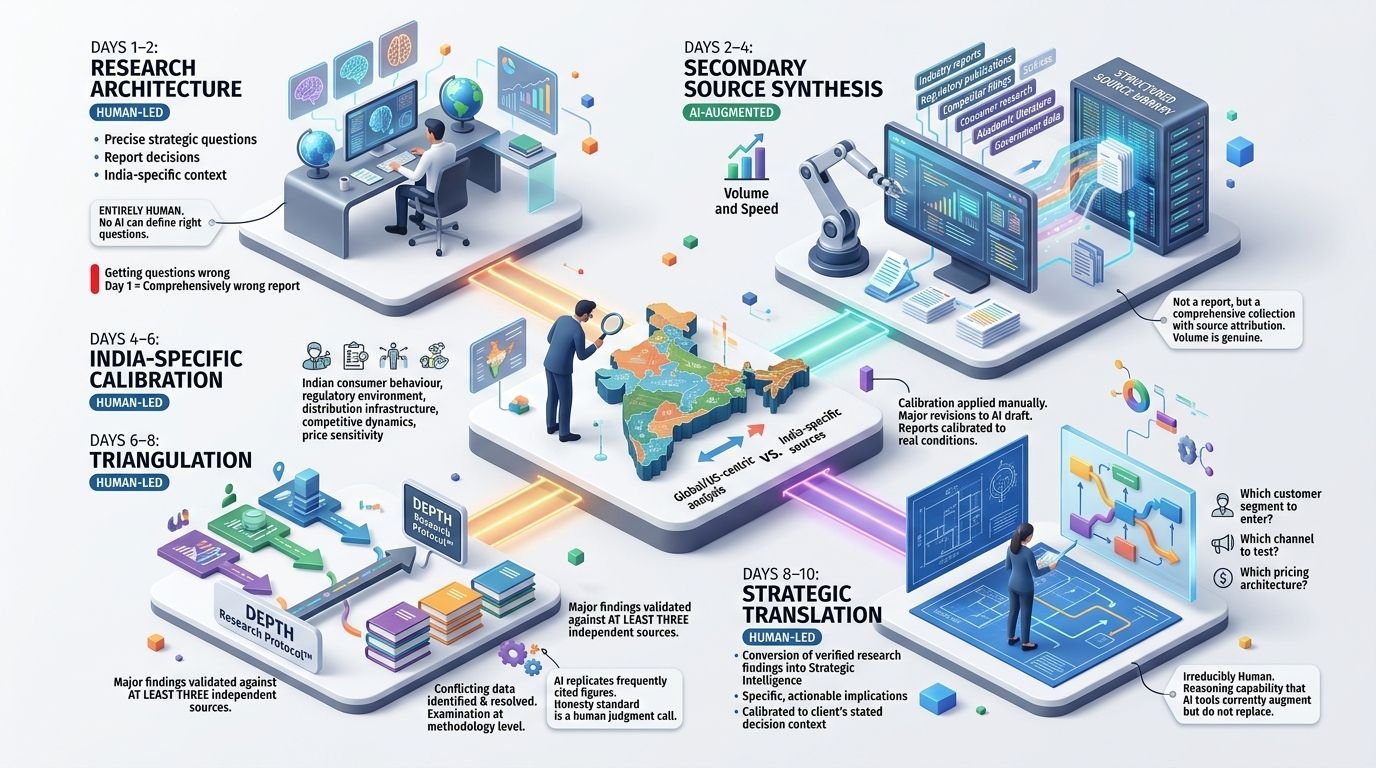
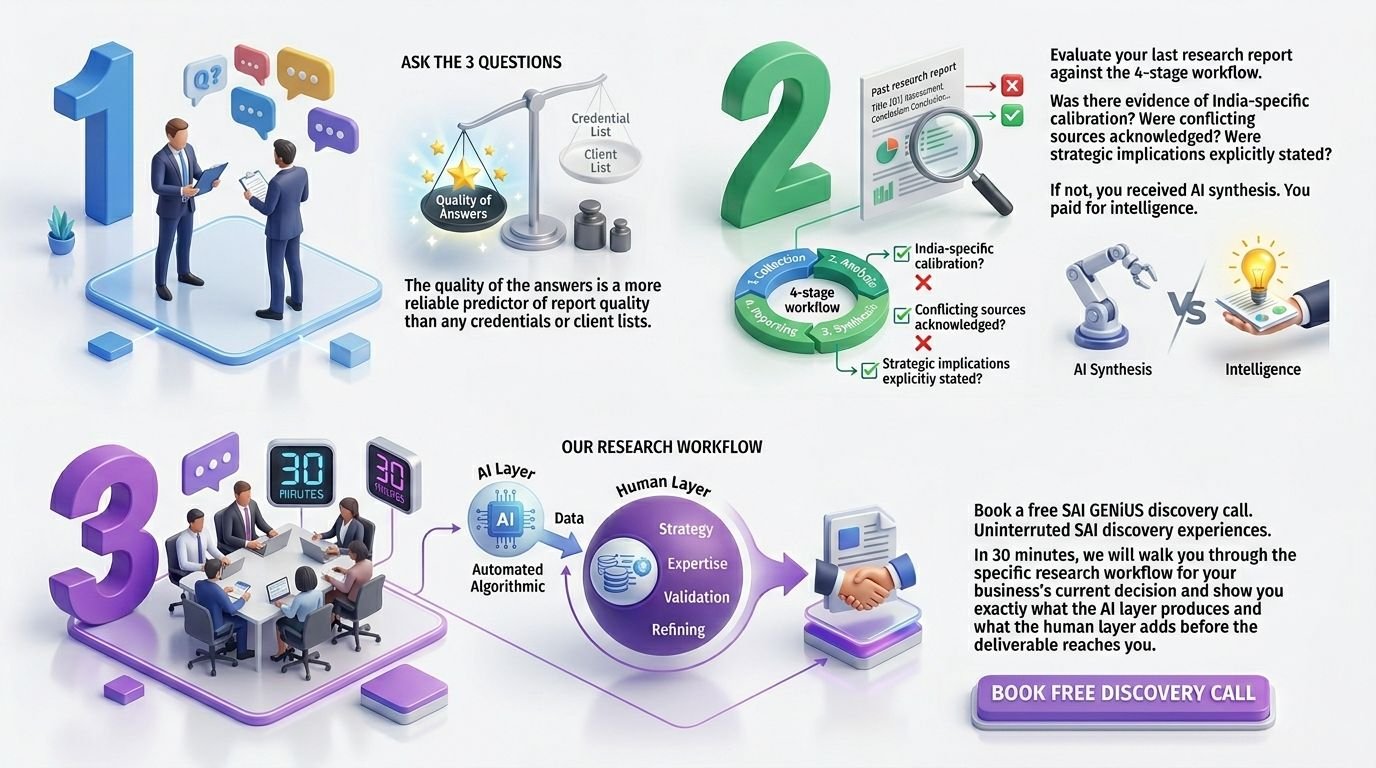
Every SAI GENiUS engagement begins with a research architecture session, a structured process in which the lead analyst defines the precise strategic questions the report needs to answer, the specific decisions it will inform, and the India-specific market context that determines which sources are relevant and which are not.
This stage is entirely human. No AI tool can define the right research questions for a specific business decision because the right questions depend on the client’s specific competitive position, capital constraints, customer segment, and strategic horizon. Getting the questions wrong at Day 1 produces a report that answers the wrong questions comprehensively. No amount of AI synthesis quality recovers from that failure.
Days 2–4: Secondary Source Synthesis AI-Augmented
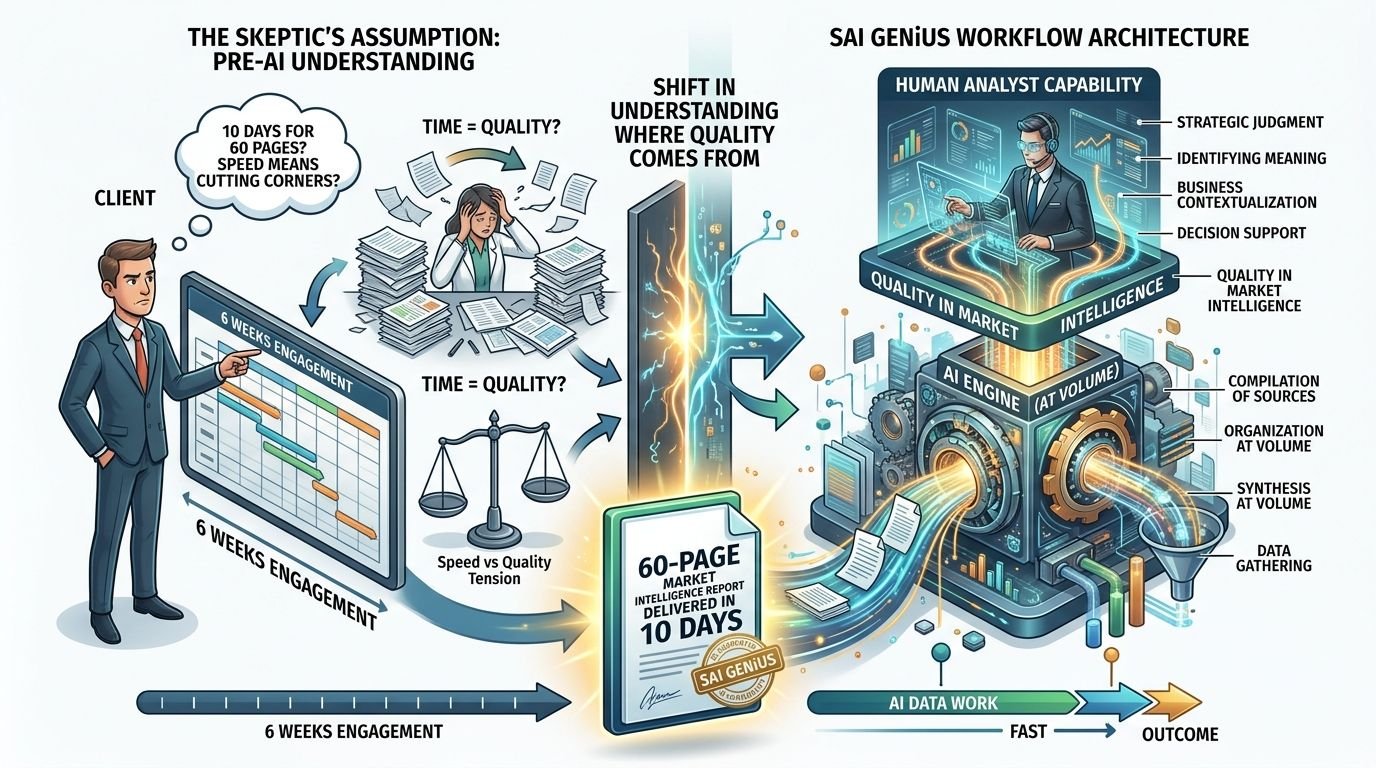
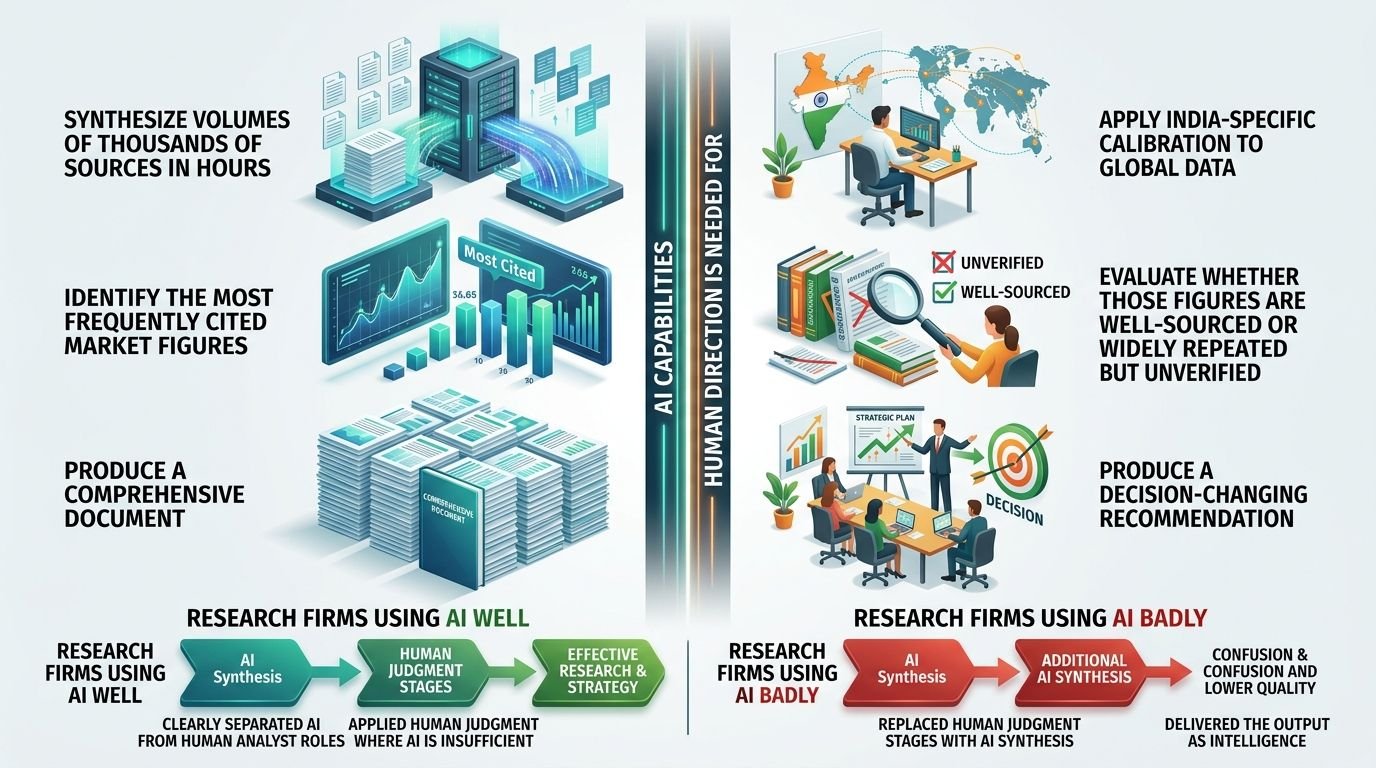
With the research architecture defined, the AI-augmented synthesis layer begins. This is where the speed advantage of AI research tools is most significant and most genuine: the systematic identification, retrieval, and synthesis of relevant secondary sources, industry reports, regulatory publications, competitor filings, consumer research, academic literature, and government data at a volume and speed that no human analyst team could replicate in the same timeframe.
What the AI produces at this stage is not a report. It is a structured source library, a comprehensive, organised collection of relevant data points, with source attribution, across the dimensions the research architecture defines. The synthesis is real, and the volume is genuine. The strategic interpretation has not yet begun.
Days 4–6: India-Specific Calibration Human-Led
The most common failure mode of AI-generated market research is the application of global or US-centric analysis to Indian market questions without calibration to India’s specific consumer behaviour, regulatory environment, distribution infrastructure, competitive dynamics, and price sensitivity.
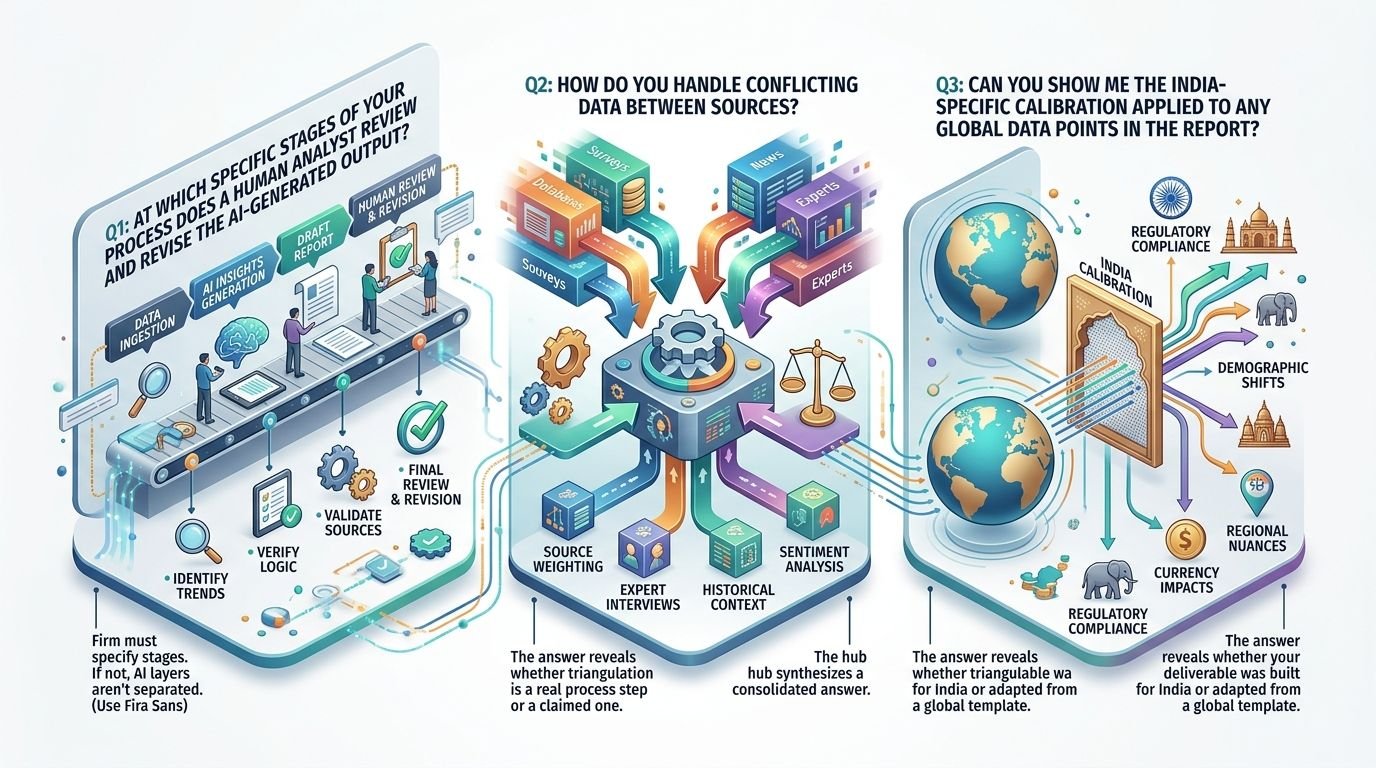
This calibration is applied manually by the lead analyst, cross-referencing AI-synthesised global data against India-specific sources, identifying where the global pattern applies to the Indian context and where it does not, and adjusting every market size estimate, growth rate, and competitive observation against the India-specific evidence base. This stage typically produces the most significant revisions to the AI-synthesised draft and is the stage that most distinguishes a research report calibrated to India’s actual market conditions from one that describes India using global data with Indian names substituted.
Days 6–8: Triangulation Human-Led
Every major finding in an SAI GENiUS deliverable is validated against at least three independent sources before it is treated as established. This is the DEPTH Research Protocol™ and it exists because AI synthesis tools, trained on large corpora of published content, have a systematic tendency to reproduce the most frequently cited figures in a domain regardless of whether those figures are independently verified or simply widely repeated.
The triangulation stage is where conflicting data sources are identified and resolved. Where two credible research publications disagree on a market size, the discrepancy is examined at the methodology level,l and both figures are retained with explanation, rather than the more convenient figure being selected. This is the honesty standard that the SAI GENiUS editorial philosophy commits to and it is a human judgment call, not an algorithmic one.
Days 8–10: Strategic Translation Human-Led
The final stage is the conversion of verified research findings into strategic intelligence, the specific, actionable implications for the client’s business that the data supports. This is the stage that most research reports skip entirely: they deliver the data and leave the interpretation to the reader. SAI GENiUS delivers the data and the interpretation explicitly, specifically, and calibrated to the client’s stated decision context.
This stage is irreducibly human. The judgment required to translate a market size figure, a competitive density observation, and a consumer behaviour finding into a specific recommendation about which customer segment to enter first, which channel to test before committing budget, or which pricing architecture the market evidence supports is a strategic reasoning capability that AI tools currently augment but do not replace.